🗳️ BlockVote
A secure and transparent digital voting platform leveraging blockchain technology to increase trust, accessibility, and civic engagement
My Role
UX Research
UX/UI Design
Interaction Design
Prototyping
Usability Testing
Timeline
4 Months
Jan - Apr 2024
Tools
Figma
Miro
Maze
UserTesting
Deliverables
Mobile App Design
Design System
Interactive Prototype
Low trust in digital voting systems
Low trust in online voting systems
Fear of manipulation or lack of verification
Confusing, high-pressure voting interfaces
Limited accessibility for first-time and elderly voters
Trustworthy digital democracy
Ensures vote integrity & transparency
Is simple, accessible, and low-stress
Builds trust without technical knowledge
Encourages higher voter participation
Design Process
Research
User interviews & surveys
Define
Pain points & personas
Ideate
Feature prioritization
Design
Lo-fi to hi-fi
Validate
Usability testing
Research
Conducted surveys and interviews with 25 potential voters across different demographics to understand voting behavior and trust barriers
Survey Analysis
60+ responses on voting habits and concerns
User Interviews
20 in-depth sessions with voters
Competitive Analysis
Analyzed 8 existing voting platforms
Key Insights
don't trust digital voting due to lack of transparency
feel anxious & rushed during the voting process
want immediate verification that their vote counted
Define
How might we create a secure digital voting experience that builds trust through transparency while remaining simple and accessible for all users, regardless of technical knowledge?
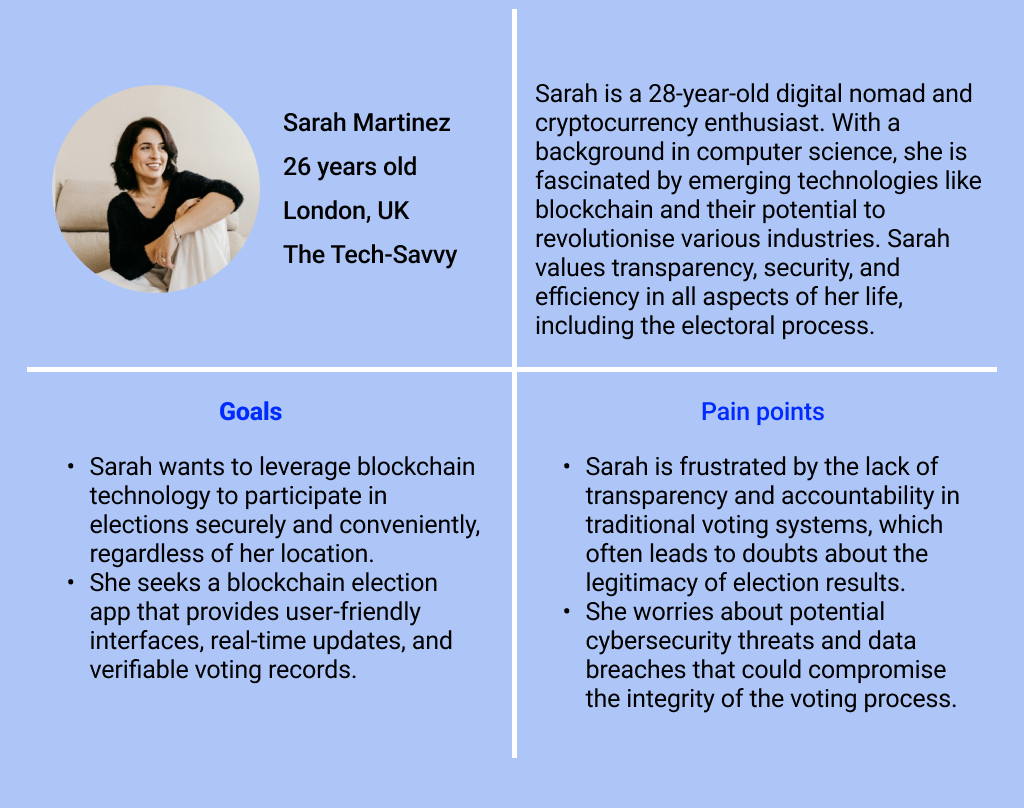
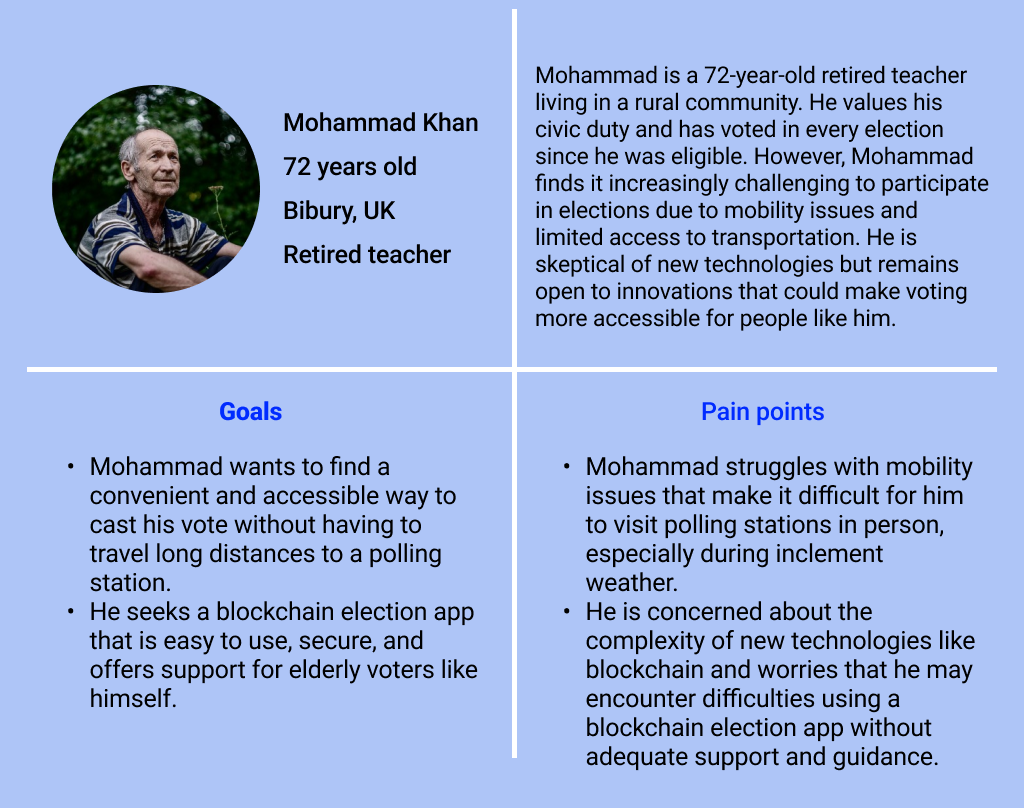
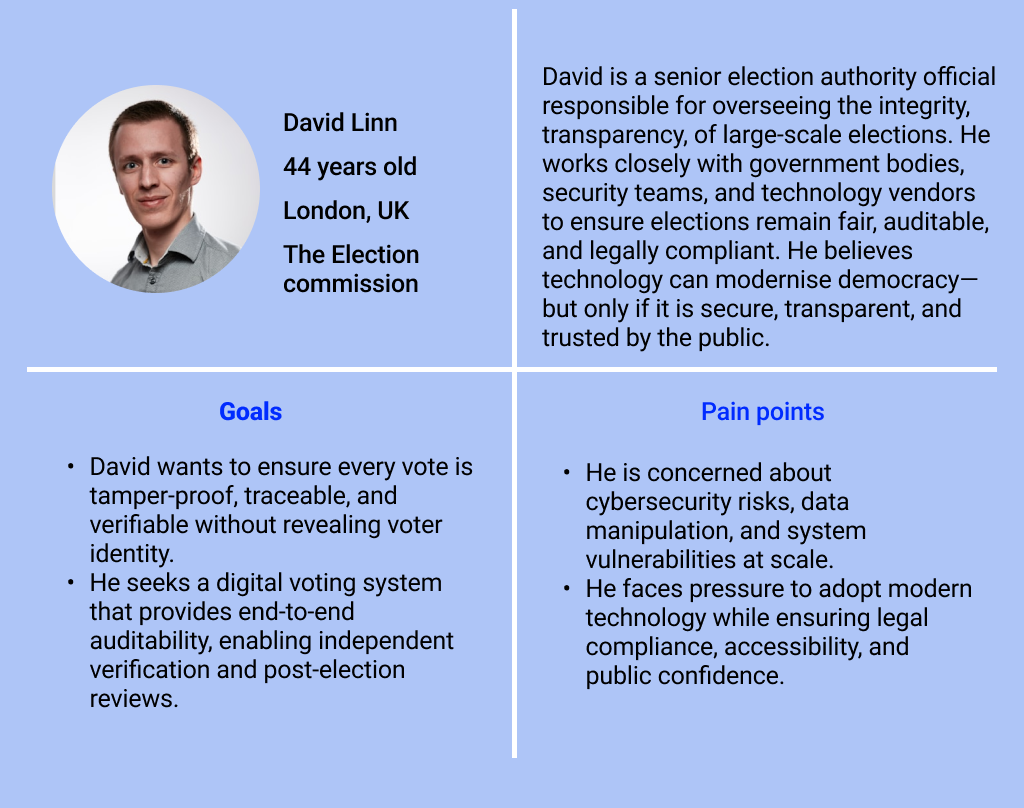
User Personas
Everyday Voter
Regular Citizen
First-time/Elderly Voter
Needs Support
Election Authority
System Administrator
Key Features
Prioritised features based on research insights and security requirements
Secure PIN Authentication
Simple, trusted login without complex passwords or technical knowledge
Blockchain Vote Recording
Immutable, transparent vote storage without exposing technical complexity
Real-time Status Updates
Live voting progress and confirmation for peace of mind
Vote Verification Receipt
Clear confirmation and proof of successful vote submission
Distraction-free Ballot Flow
Calm, focused interface reducing cognitive load and anxiety
Accessibility-first Design
High contrast, large tap targets, and clear language for all users
Feature Prioritization: MoSCoW Method
Used MoSCoW analysis to prioritize features based on user needs, security requirements, and MVP scope
MUST Have
- Secure PIN Authentication
- Blockchain Vote Recording
- Vote Verification Receipt
- Distraction-free Ballot Flow
SHOULD Have
- Real-time Status Updates
- Vote History & Tracking
- Multi-language Support
COULD Have
- Candidate Info Summaries
- Voting Reminders
- Social Sharing (anonymous)
WON'T Have (Yet)
- Live Debate Streaming
- Voter Forum/Discussion
- AI Voting Recommendations
Design & Prototype
Core Flow Mapping
Mapped voting flow and critical decision points
Interface Refinement
Tested with users to validate clarity and trust signals
Production Design
Polished with security indicators and accessibility standards
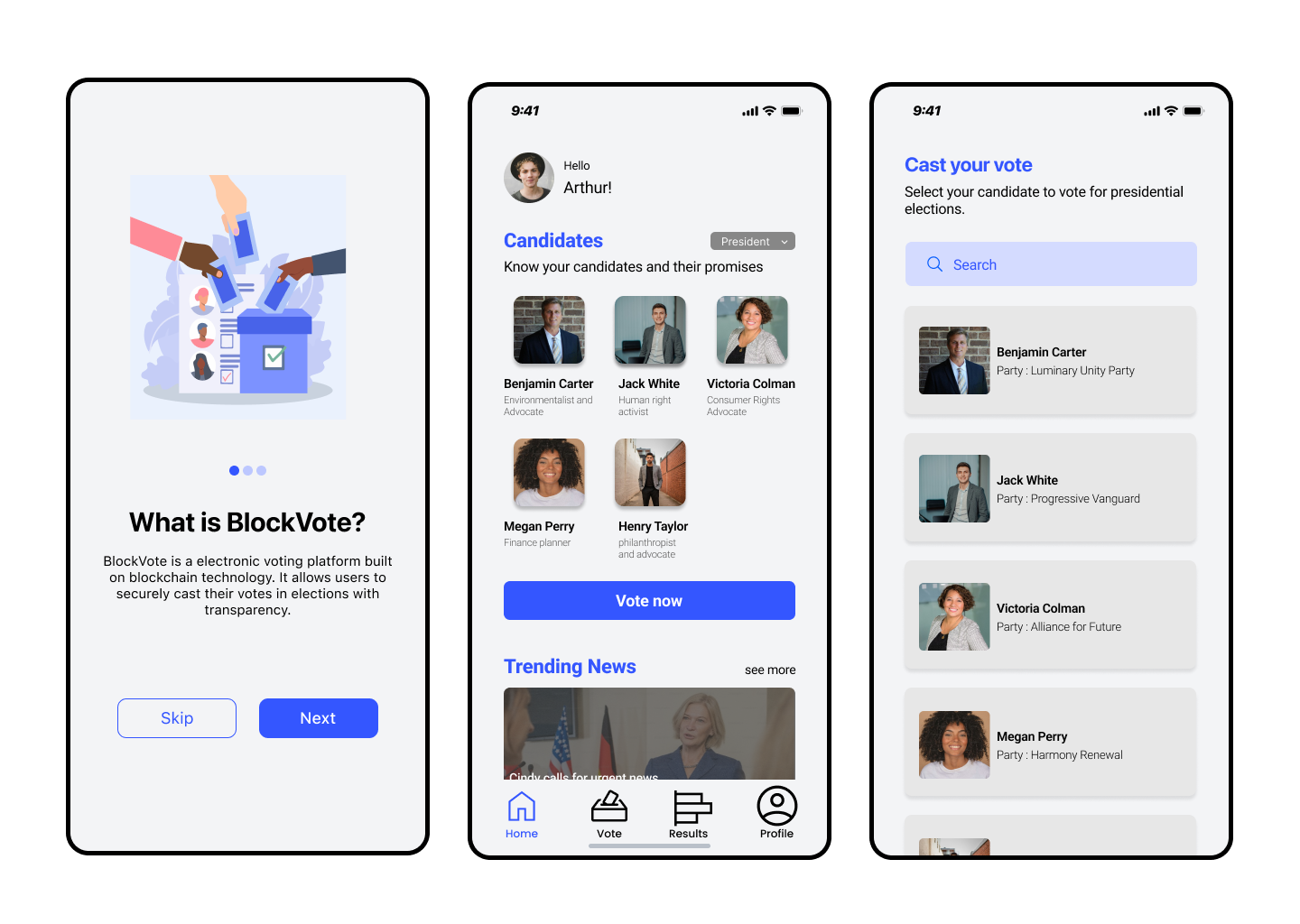
High-Fidelity Prototypes
The final design emphasizes trust, clarity, and calmness throughout the voting journey
Testing & Iteration
Conducted usability testing with 8 participants across different age groups and technical abilities
✓ What Worked
Clear Navigation
100% task completion rate on first attempt
Trust Indicators
Blockchain visualization increased confidence by 85%
Reduced Anxiety
Users reported feeling "calm" and "in control"
🔄 Iterations Made
Enhanced Contrast
Increased text size and contrast for elderly users
Double Confirmation
Added review step before final submission
Simplified Language
Removed technical jargon from all copy
Impact
Successfully created a voting platform that users described as "trustworthy," "simple," and "reassuring" — addressing the core trust deficit in digital voting
Task completion rate
Trust & confidence score
Would use over traditional voting
Based on moderated usability testing with 8 participants across different demographics.
Key Learnings
Trust is designed, not declared
Users didn't trust the system just because we said it was secure. Trust came from transparent visual feedback, clear explanations, and immediate verification at every step.
Simplicity enables security
The most secure features failed when users couldn't understand them. Hiding technical complexity while showing outcomes was key to both usability and trust.
Calm design for high-stakes tasks
Voting is stressful. A distraction-free, low-pressure interface wasn't just nice to have—it was essential for accuracy and user confidence.
Blockchain is explored as a conceptual model to enable transparency and immutability in voting, rather than a production-ready implementation.
Constraints: No real-world deployment, limited access to government-grade validation, and the challenge of simplifying complex blockchain concepts for non-technical users.
Full Persona Details
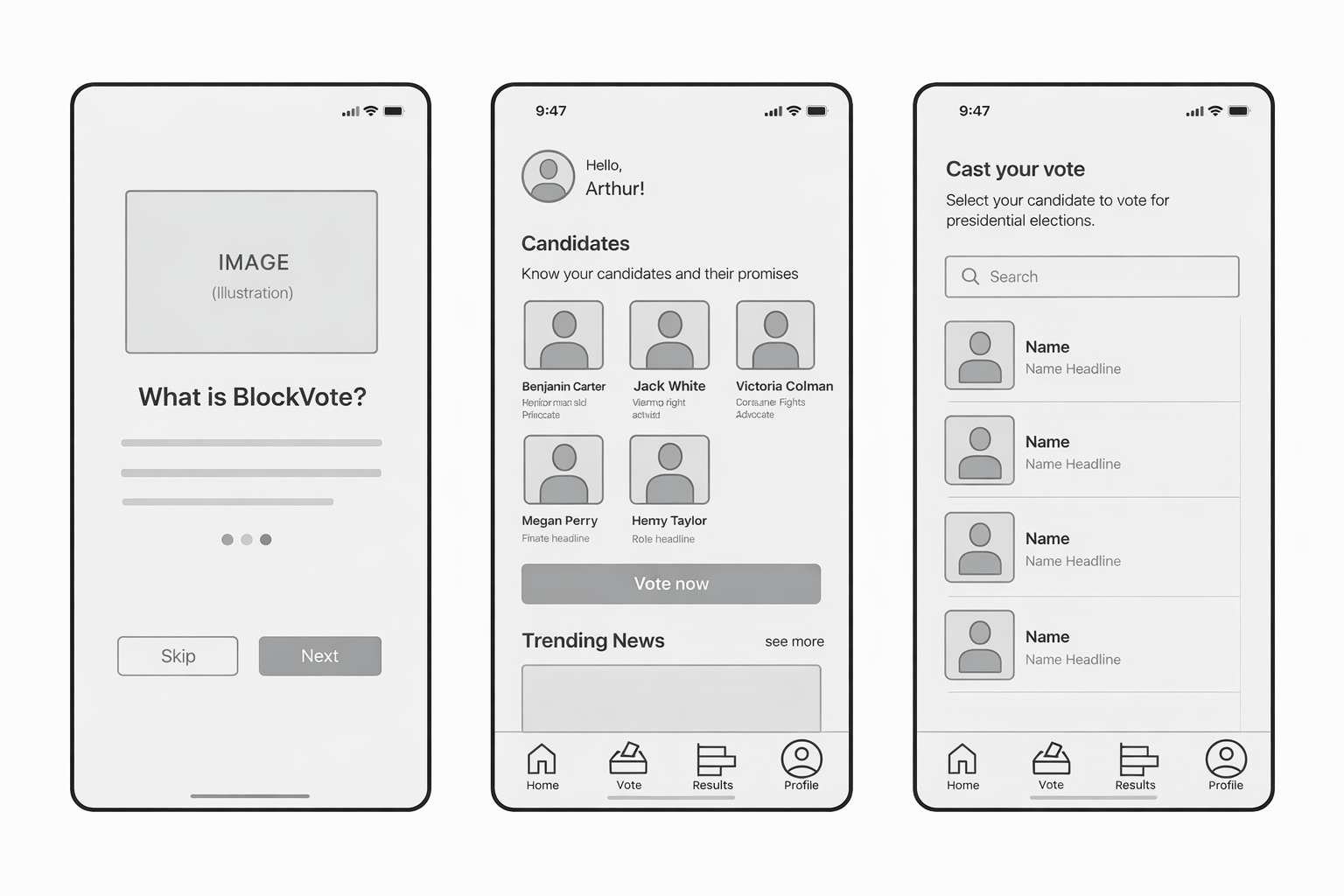
Mid-Fidelity Design
Mid-Fi Wireframes & User Flow
Tested interface clarity and voting flow with users before high-fidelity design
High-Fidelity Prototypes
Authentication & Onboarding
Voting Interface
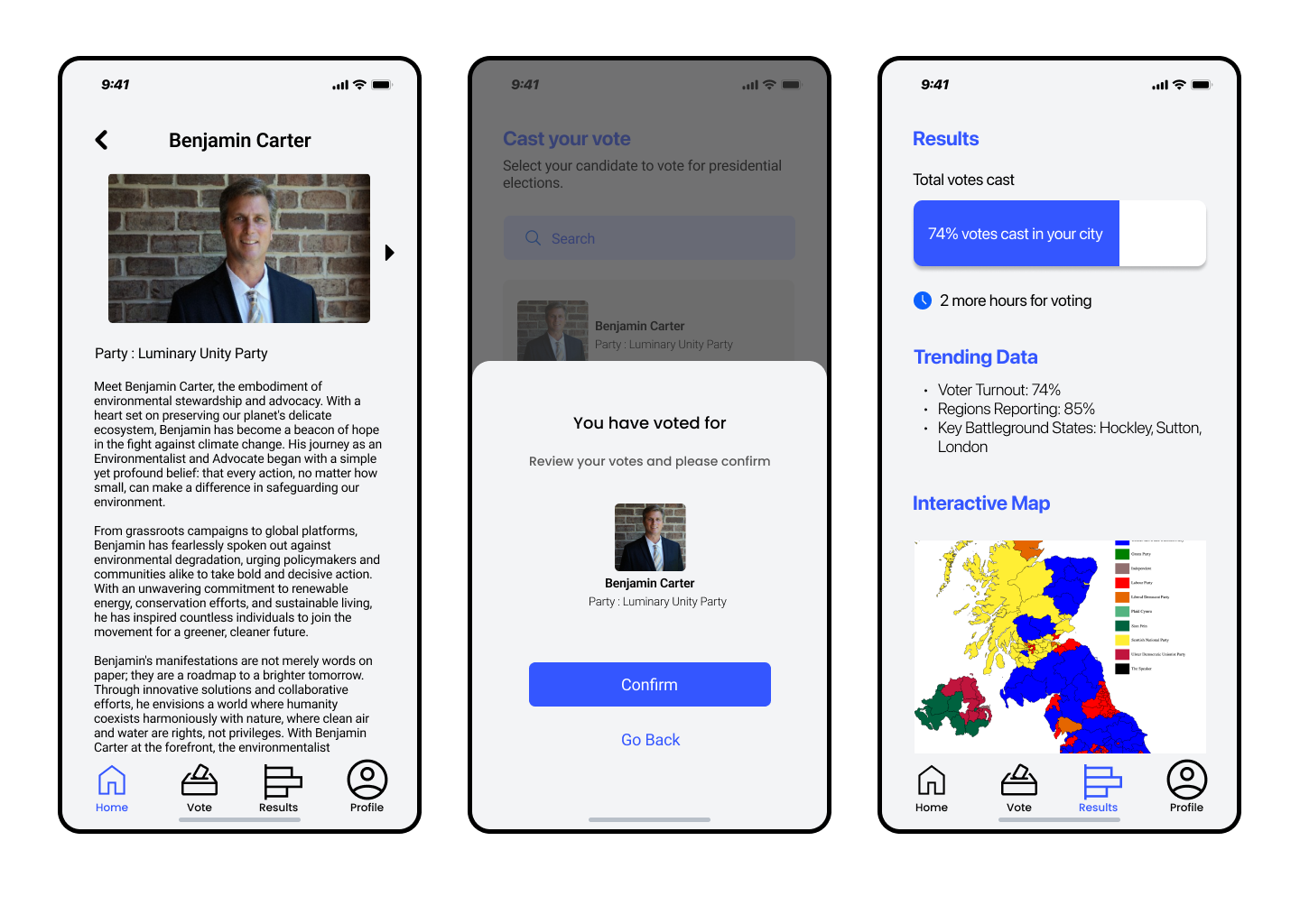
Verification & Confirmation
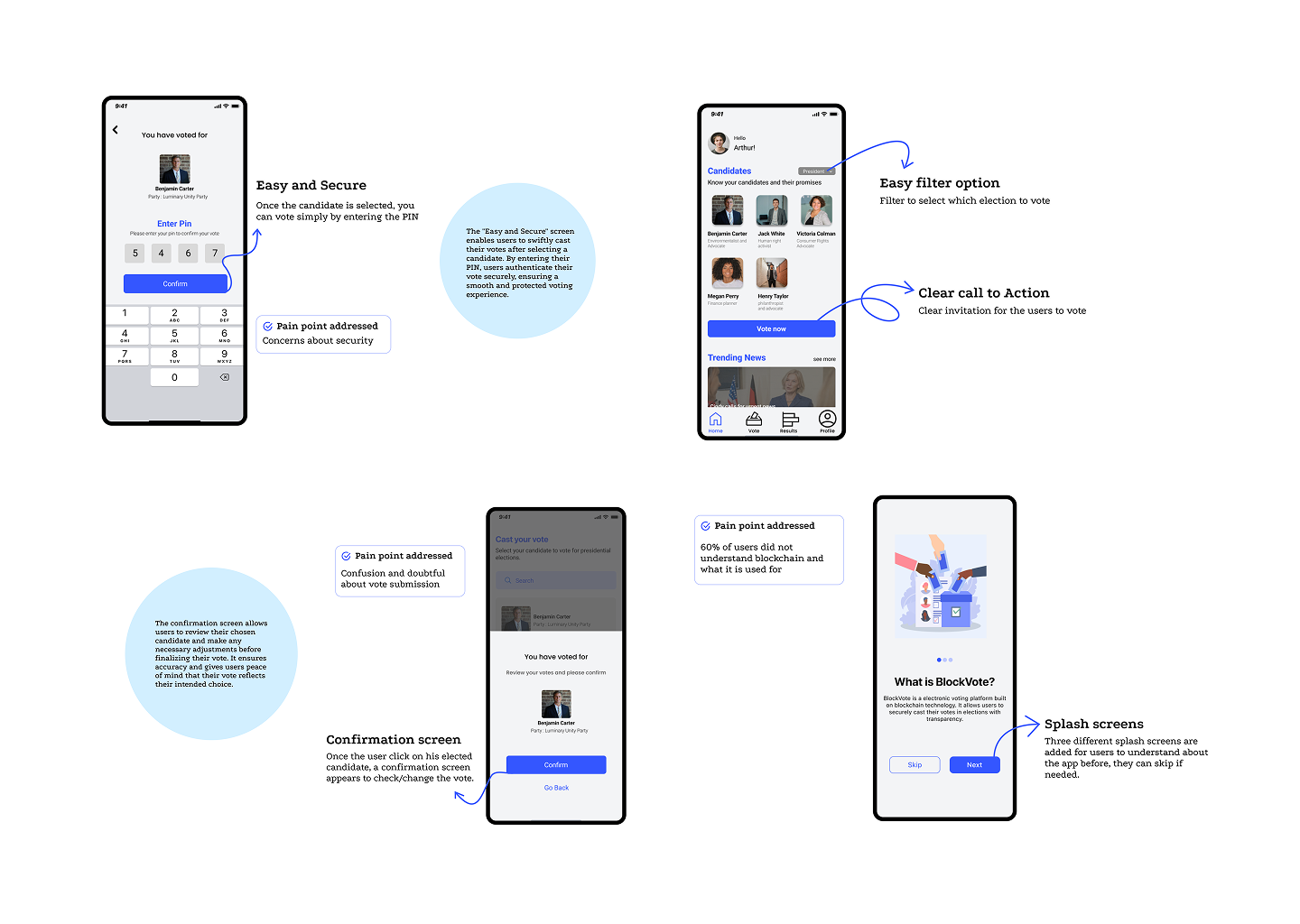
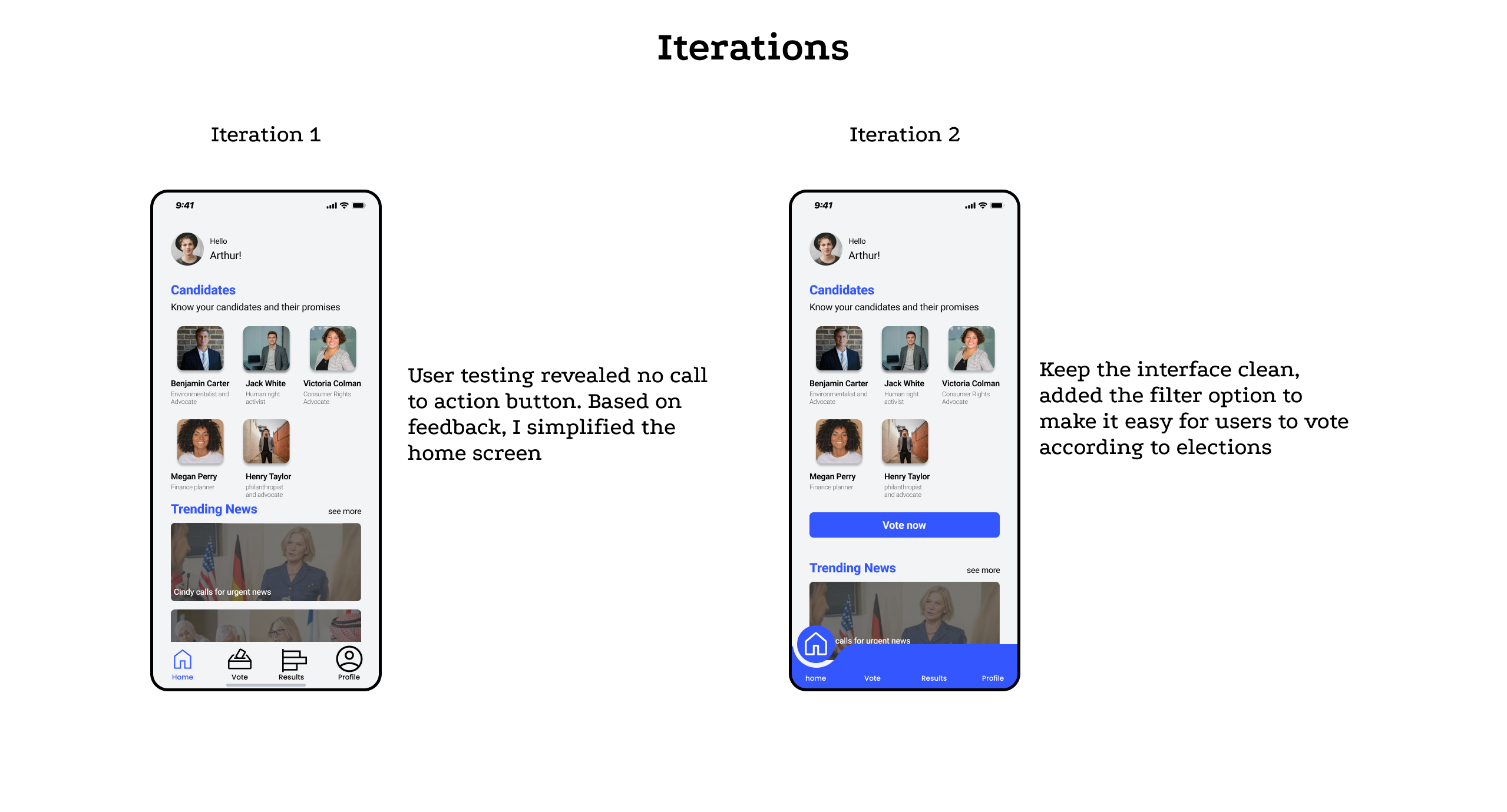
Design Iterations
Before & After Iterations
Key improvements based on usability testing feedback